

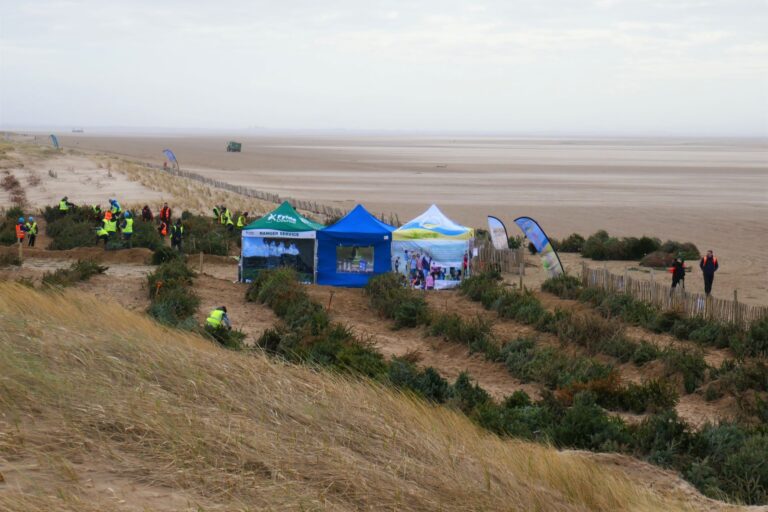
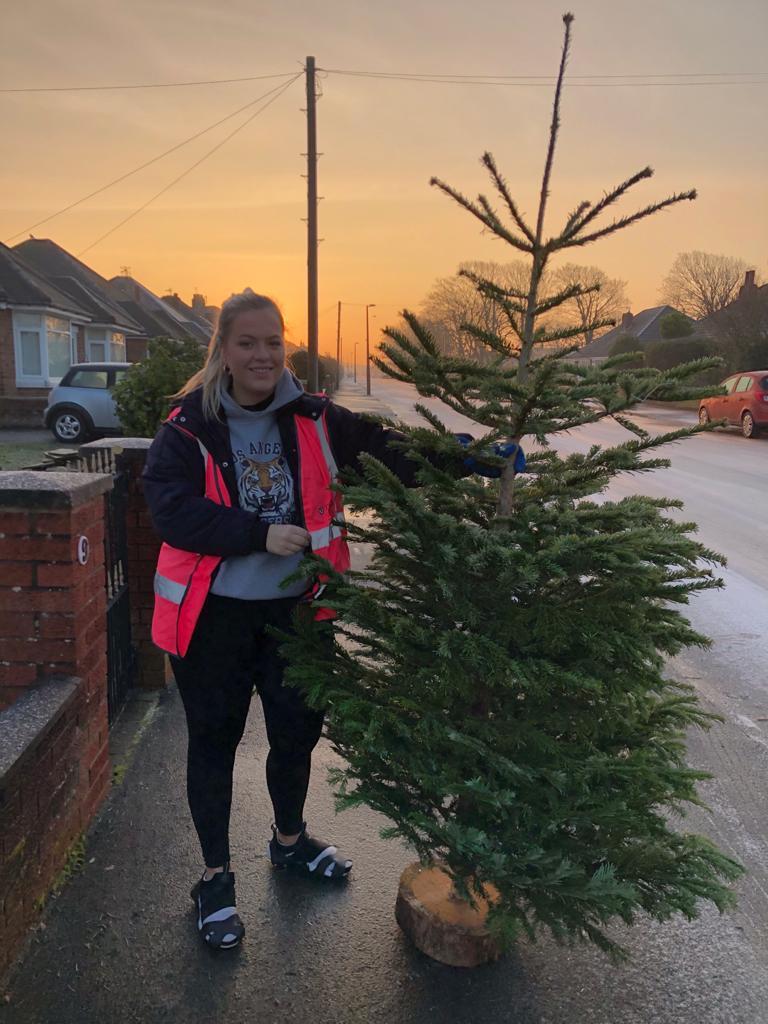
Festive trees and Sand Dunes might seem like an unlikely match! But discarded ones get a new lease of life with recycling Christmas Trees at St Annes sand dunes. It helps to protect and extend Fyldes sand dunes as part of the area’s Dunes Project. And Trinity Hospice also benefits too!
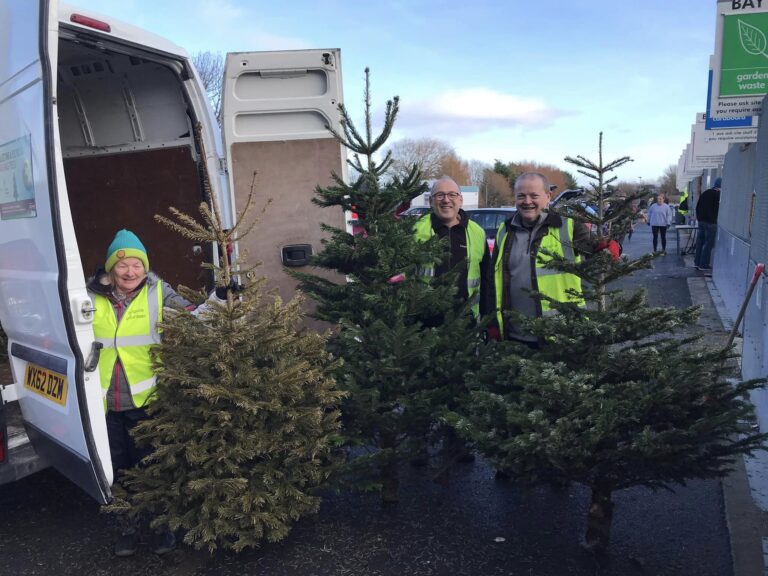
Thanks to the generosity of everyone involved, each year sees a huge Christmas Tree collection. A whopping team of 100+ volunteers spend a weekend collecting a total of 2,151 trees from across the Fylde coast. And by booking trees for collection a huge amount of money is raised each year for the Fylde Coast hospice. A huge thank you to all the amazing volunteers and generous donors.
The Christmas Tree Collection
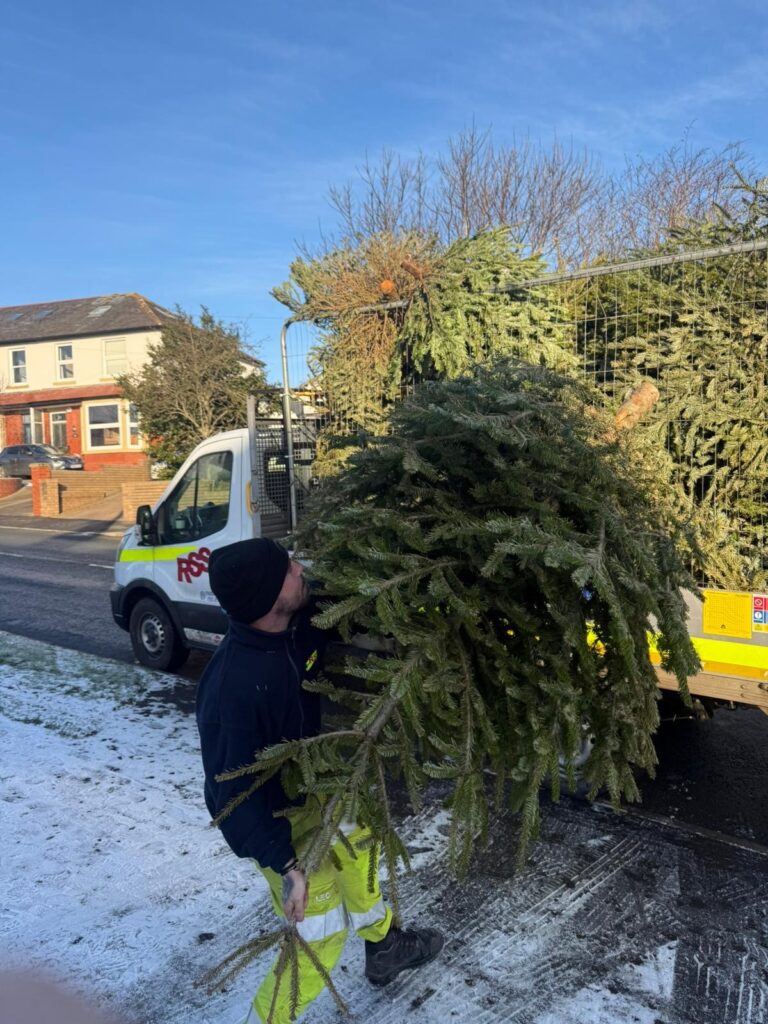
From Friday 9 January to Sunday 11 January 2026, the hospice’s incredible team of volunteers will be out in force. They’ll collect pre-booked real Christmas trees and take them to be recycled or repurposed. Fylde Council’s Sand Dunes Restoration Project, uses old, real trees to protect the coastline.
The collection service is sponsored by Ameon and Eastham’s Solicitors, and is completely free. But the hospice is kindly asking supporters to consider making a generous donation when they make their booking.
Every pound raised helps Trinity to provide specialist care to families living across Blackpool, Fylde and Wyre when they need it most. It now costs over £14 million to run Trinity Hospice and its dedicated children’s hospice, Brian House. The 2025 Christmas tree campaign raised an incredible £31,300 for the charity.
All FY postcodes and PR4 postcodes are now covered. This year the team is hoping to collect and recycle more than 2,000 trees. The collection service is the perfect way to round off the festive period. It’s a chance for you to do something amazing for a vital charity while reducing your landfill waste and supporting the amazing sand dunes.
Bookings are available until 5th January 2026. Visit www.trinityhospice.co.uk/tree-collection to secure your slot and make a difference today.
FREE Newsletter
FREE Newsletter

A special thank you to:
- sponsors Ameon and Eastham’s,
- to the teams at Blackpool and Fylde Councils to supporting this service and providing access to their recycling services,
- and to James Andrew Tree Care, for once again be supporting the collection at the HASSRA Sports Pavilion in Thornton.
Don’t miss a thing. Get VFC newsletters direct to your inbox.
Sign up to receive interesting information, news & events every week. By entering your details, you are agreeing to our terms, conditions and privacy policy. You can unsubscribe at any time.
Recycling Christmas Trees at St Annes Sand Dunes
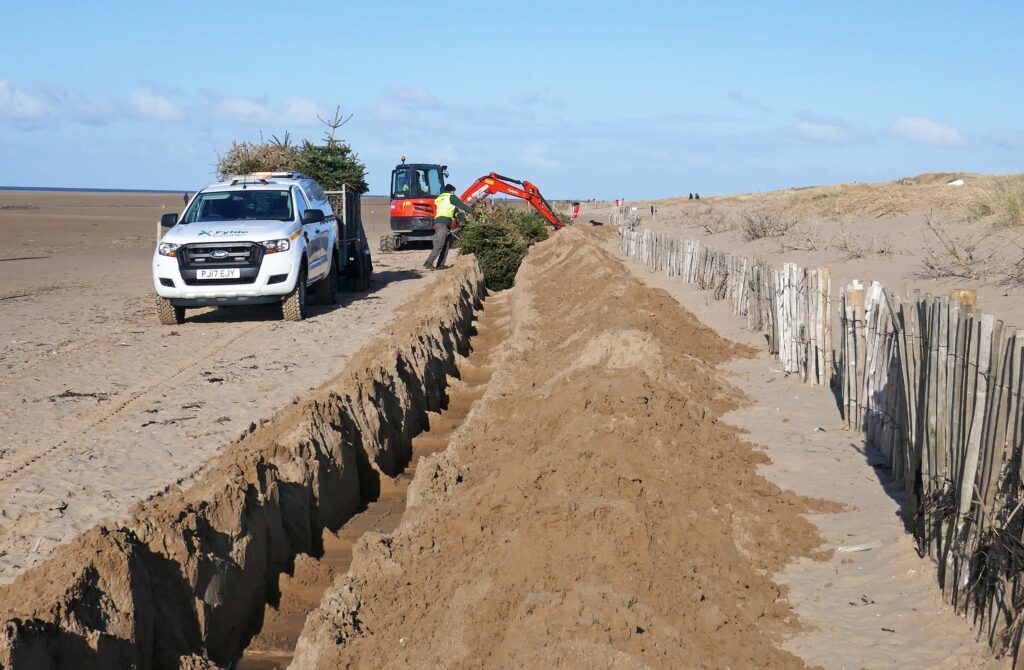
Volunteers and the Fylde Sand Dunes team bury the trees you donate in the beach in strategic places to help reduce erosion of the dunes. They’re an effective soft sea defence and help to create a unique habitat for many plants and animals.
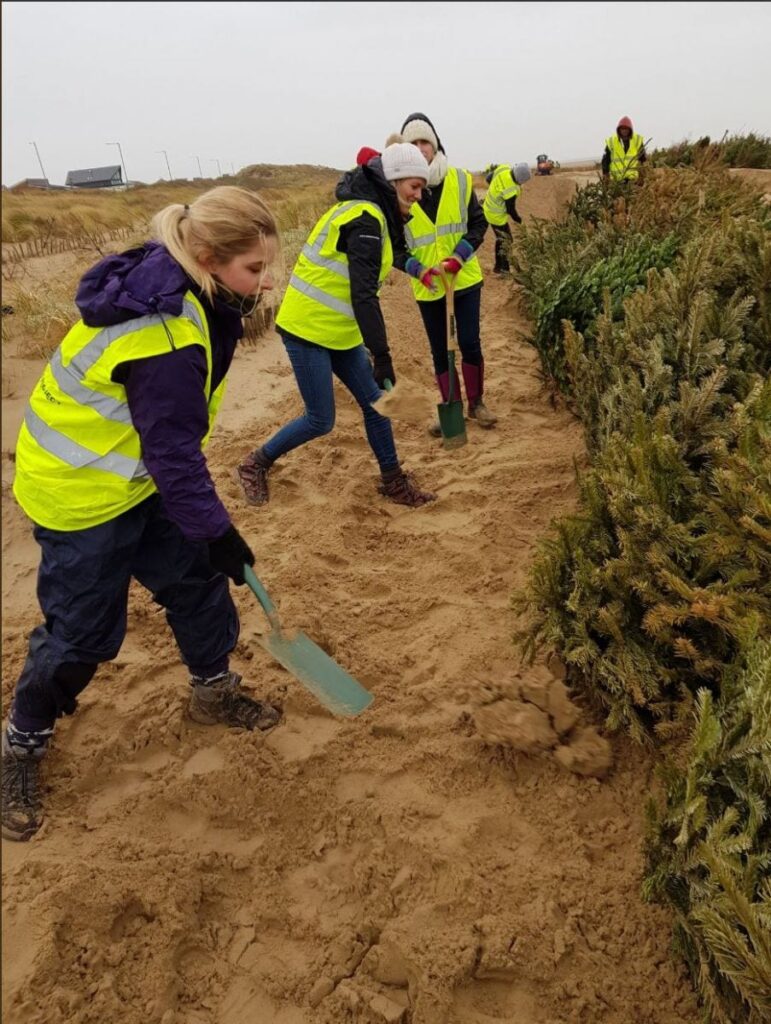
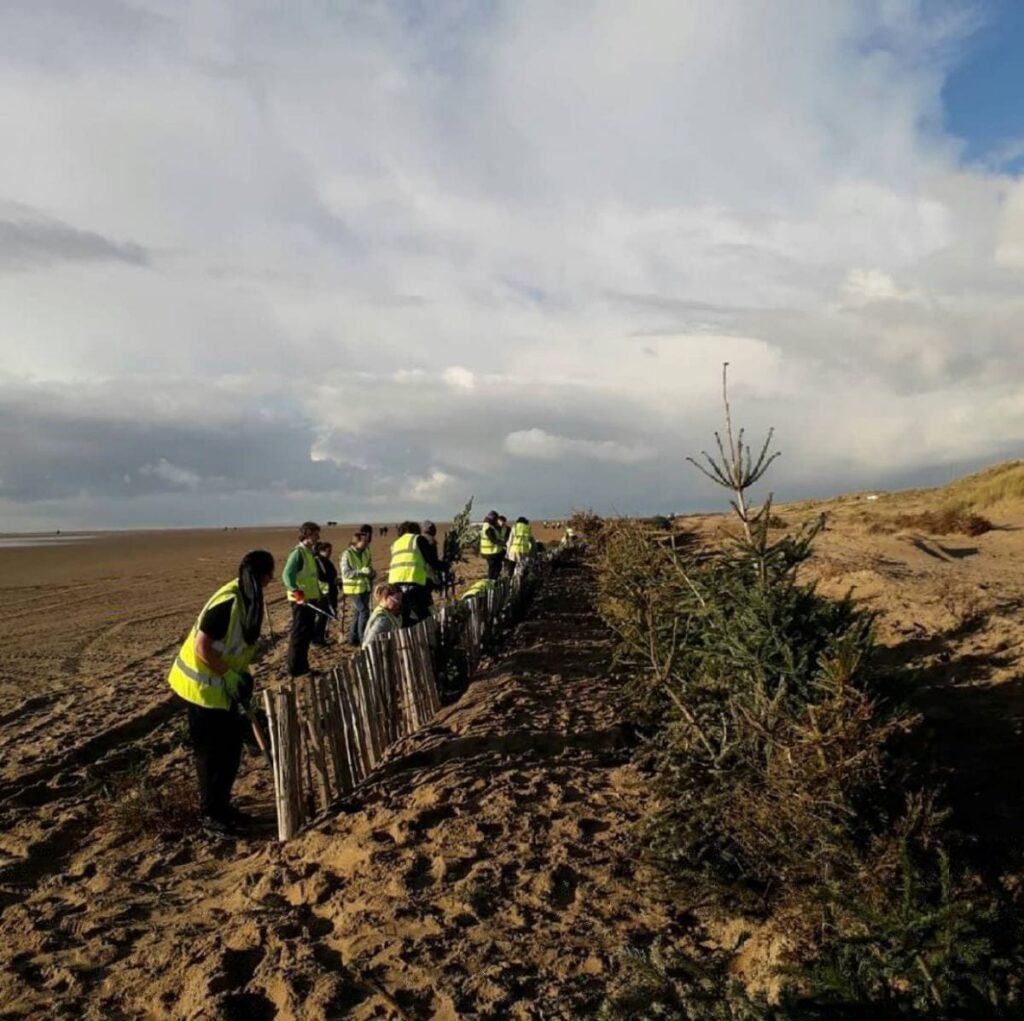
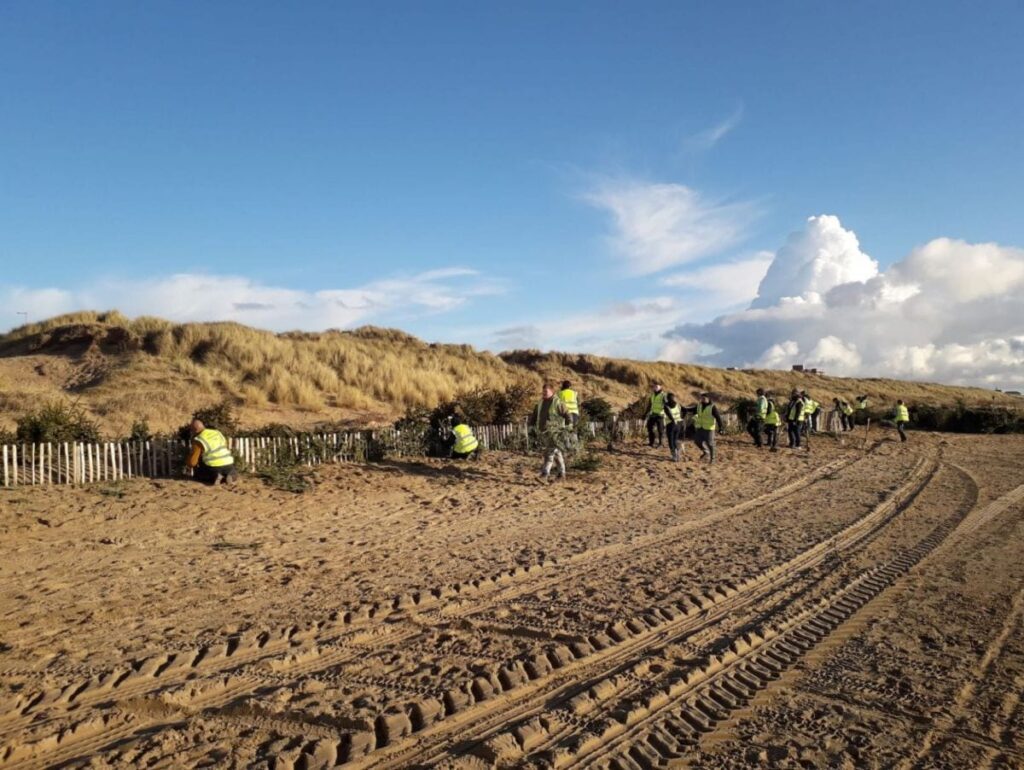
A team of hardy volunteers have been out again in late January 2023, planting this years batch! Thank you to Sue Massey for these photos –
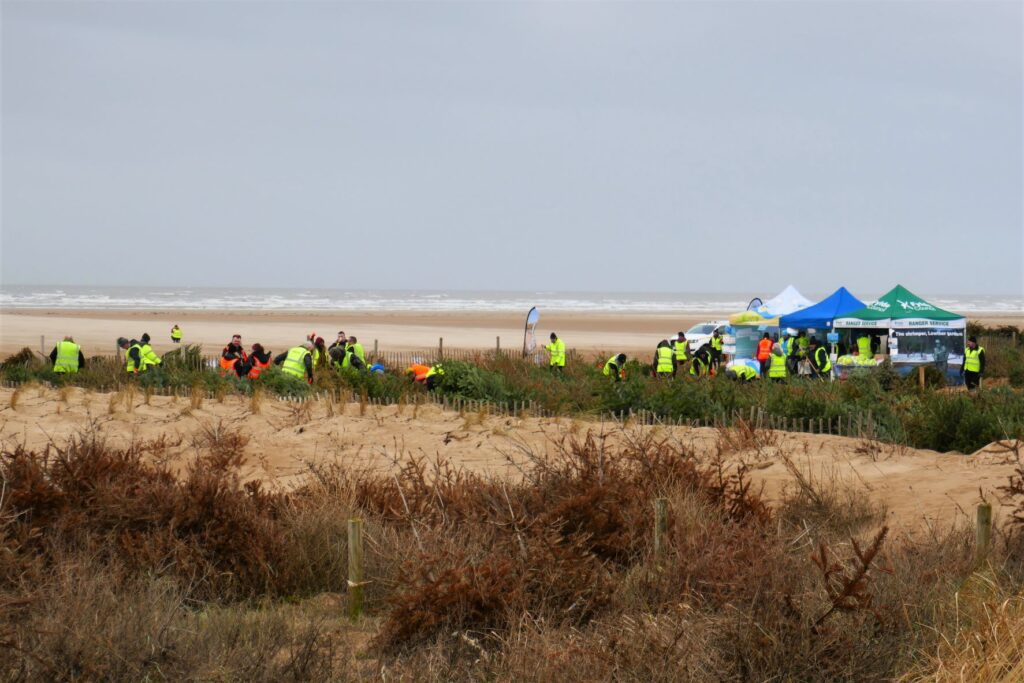
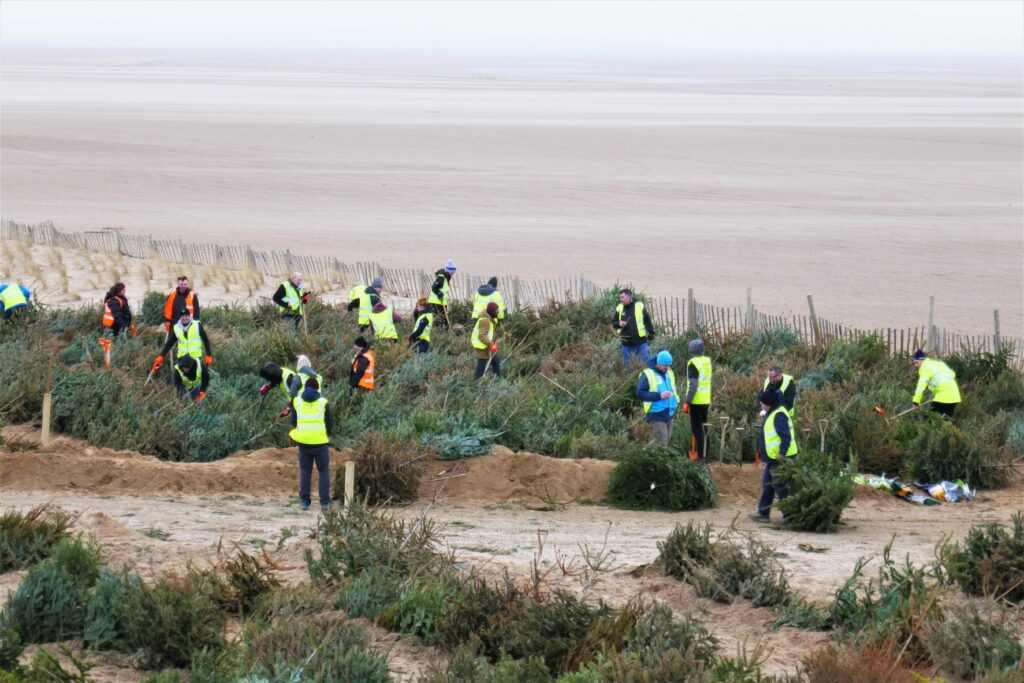
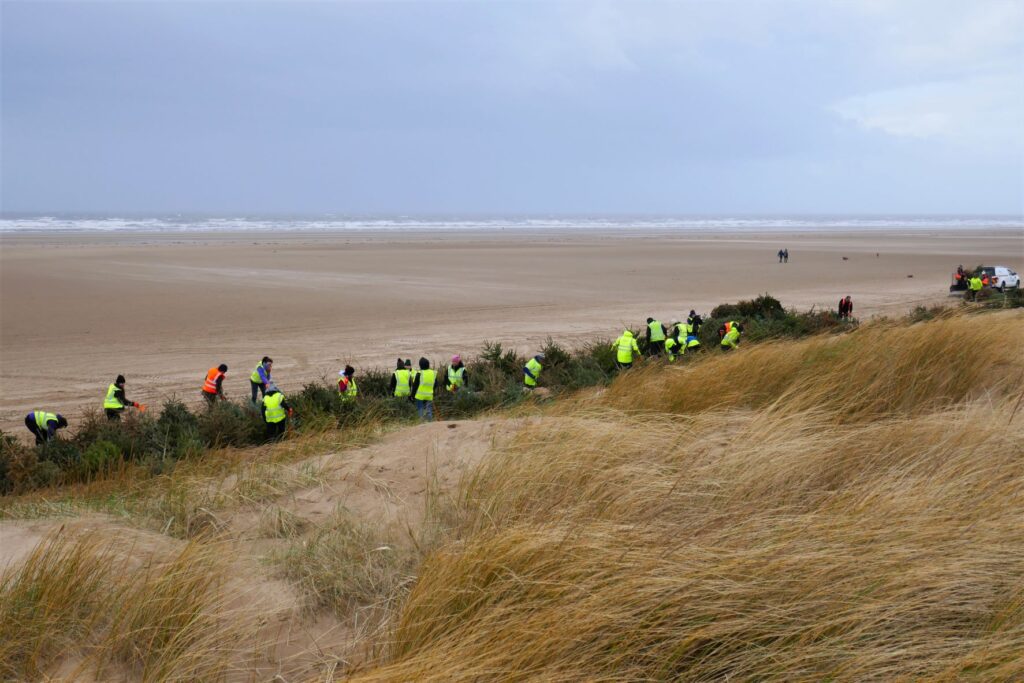
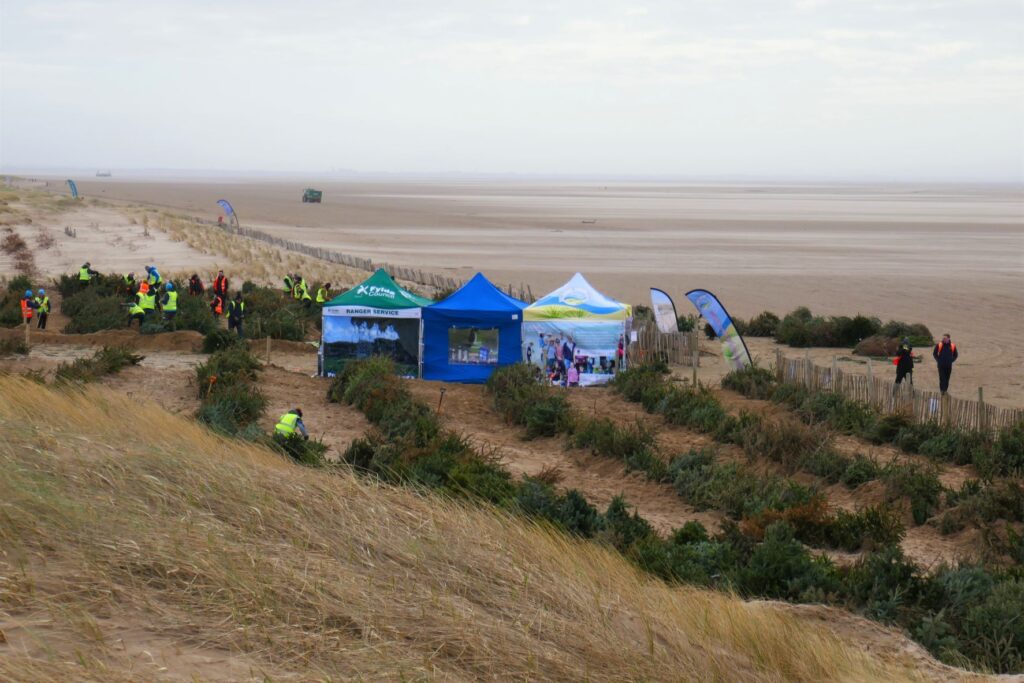
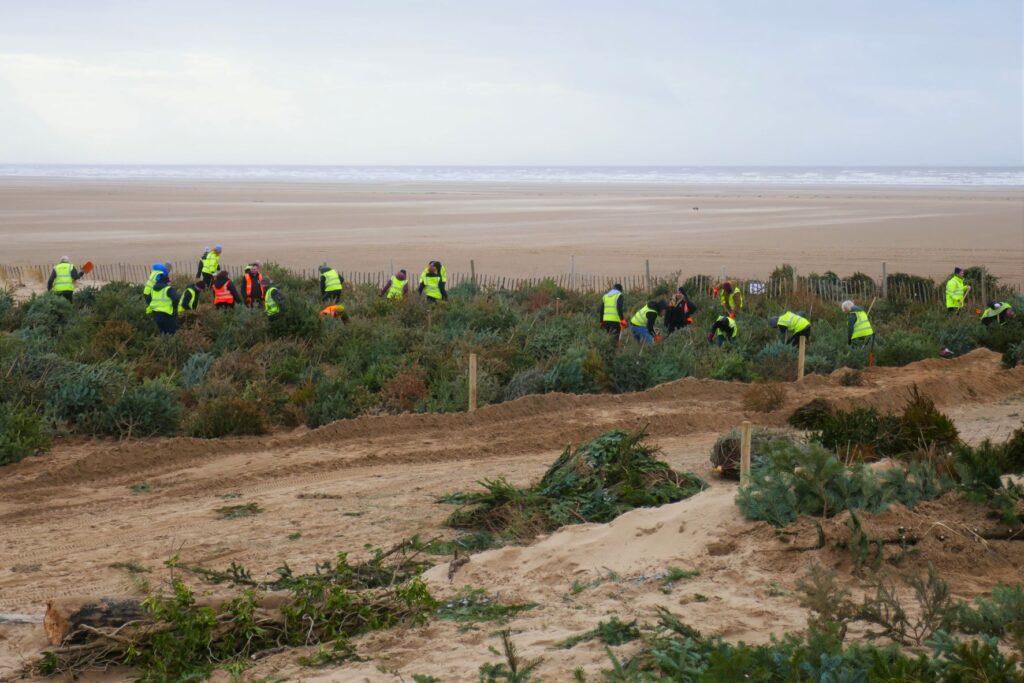
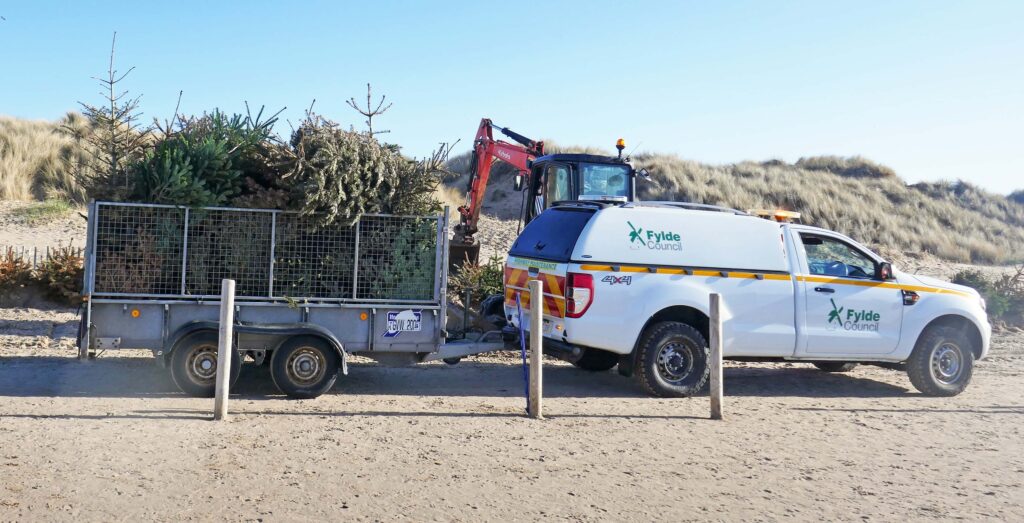
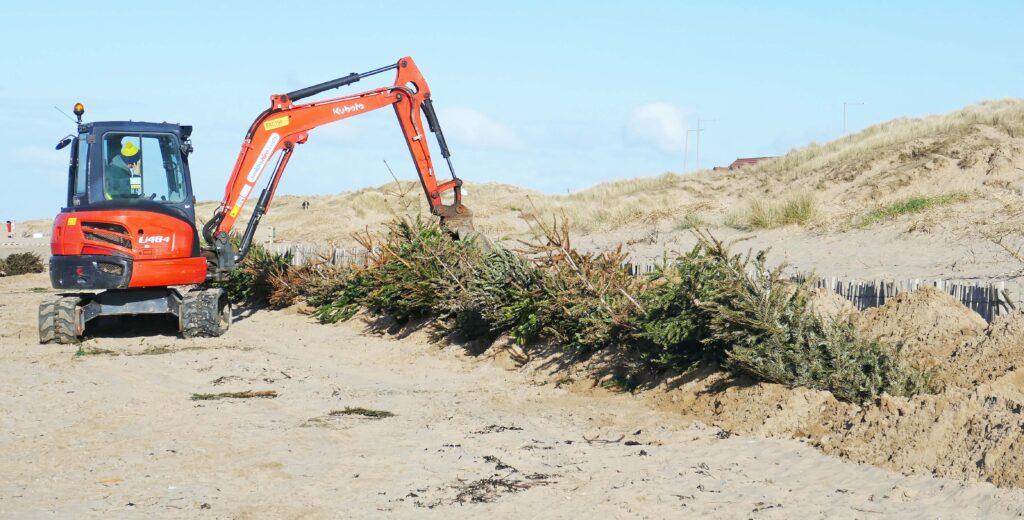
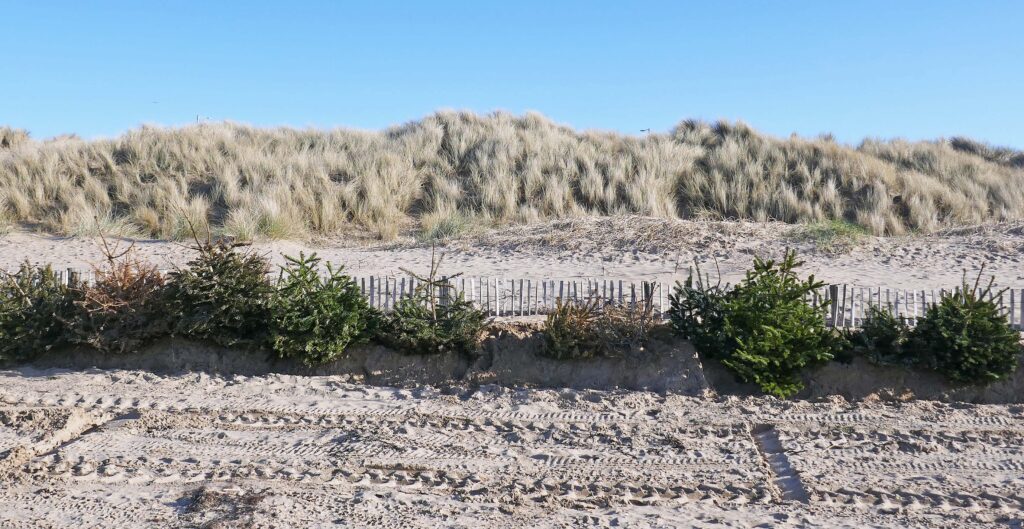
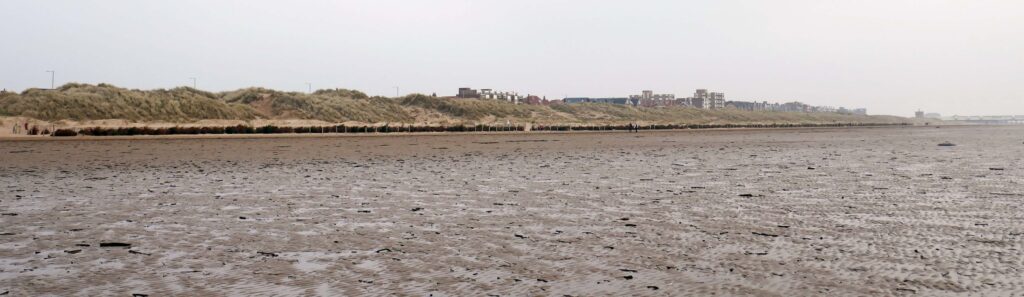
This project has been underway for several years now. This ingenious method has brought added protection to quite an extent of seafront over the years. The next two photos show the trees close-to and the extent of the planting from a distance.
A Project Started in 2012
Redundant Christmas trees were first planted in front of the dunes in a small section between Starr Gate and Todmorden Road in 2012. The aim was to extend the dunes seawards. The old trees trap the windblown sand and help the dunes to grow. It not only improves the sea defence but also reduces the problem of windblown sand for residents.
How Christmas Trees Help St Annes Sand Dunes
Plantings in previous years have already worked well, creating several feet of sand in front of the dunes that wasn’t there before. And it’s helped to stop hundreds of tonnes of sand from blowing away! Much of this sand would otherwise have been on the roads and in residents’ gardens.
Vitally, they also form ‘soft sea defences’, offering protection against high waves. Dunes reduce the risk of flooding and, importantly, provide extra wildlife habitat. Volunteers and council staff ‘plant’ the trees early in the year after the high Spring Tides have passed.
Not that many years ago these old trees would have gone to landfill and attracted Landfill Tax. Residents would have had to pay the price, one way or the other. With this recycling, the old trees have a new life in helping the environment.
Extending the Dunes
By the high spring tides of early 2019, the Christmas tree planting had already taken place. As the sea came much further up the beach than usual, you could see the effectiveness of this soft defence in action.

As you can see, some of the new defence line of trees and chestnut paling was breached. But there’s a distinct difference in how far the waves could travel. Where dune restoration work has taken place, the sea hasn’t reached as far as it has in the unplanted areas.

The Christmas trees and chestnut paling work together with the sand that builds up around them. The bulk reduces the energy of the waves, their speed and their reach. Over time as more and more sand is trapped, vegetation such as lyme and marram grass can begin to grow. So the dunes effectiveness against high tides and storms will increase.
Help to Plant the Christmas Trees
In the early weeks of each year, volunteers gather to ‘plant’ the Christmas trees. Fylde Sand Dunes Project team and volunteers take them out into the dunes and partially bury them. The branches of the recycled Christmas trees trap windblown sand as it comes ashore. The sand accumulates and helps to naturally build up the sand dunes. The planting line edges seaward each year, so extending the width of the dune.
The team are always looking for volunteers. If you’d like to help please visit the St Annes Sand Dunes Facebook page.
If you do get in touch, please mention that you saw it on Visit Fylde Coast – thanks!

Million Pound Boost for the Sand Dunes
The Starr Hill Sand Dune Environmental Works covers the area from Starr Gate at the boundary of Blackpool all the way to Lytham Green.
The project is a partnership between Blackpool Council, Fylde Council and the Lancashire Wildlife Trust. It’s been undertaking works to implement the Sand Dune Management Plan over the last nine years.
In early 2022, the partnership received approval to continue the works for a further five years. The Environment Agency allocated a further £999k funding to improve the sand dune habitat along the Fylde Coast.
Improving Coast Protection
Over the last 150 years much of the sand dunes have been lost. Today just 80 hectares remain.
The funding will continue to improve the standard of coast protection to nearby properties. The sand dunes protect 493 properties from coastal erosion and eight from flooding. Around 400 additional new properties will also benefit from the protection of the sand dunes as a natural coastal defence, well into the future. The continuation of the project will maintain and continue to improve the designated sand dune habitat. It follows advice from Natural England and the Environment Agency.
Work so far
Work so far includes –
- installation of fencing in vulnerable areas
- thatching using donated recycled Christmas trees
- transplanting of Marram and Lyme grass
- removal of invasive non-native species
- implementation of the 2016 Geomorphological Study recommendations
- extensive programme of community and volunteer engagement
- provision of pedestrian access routes aligned away from the prevailing wind direction
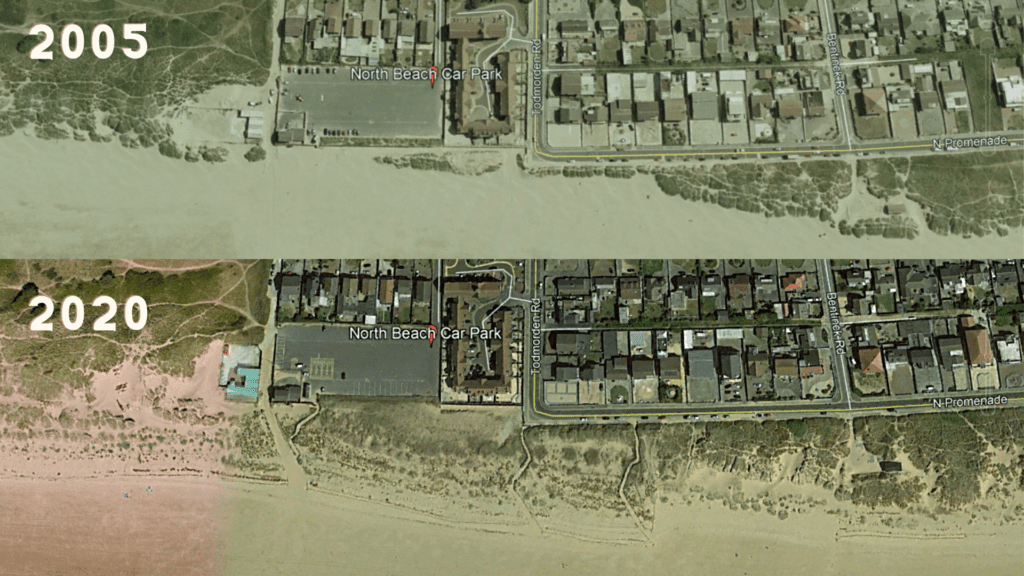
There’s been around 60-90m of cumulative dune growth in places since 2013. On average, each line of Christmas trees/chestnut paling and marram thatching adds 10m per year.
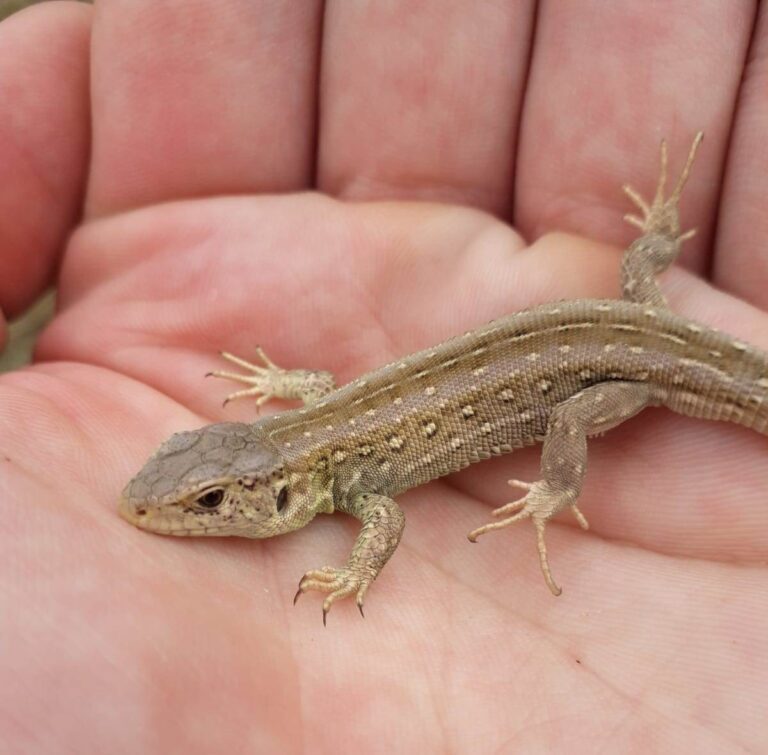
The dunes are home to several internationally significant plants, rare invertebrates, and Priority Species birds. With favourable conditions, since 2018 sand lizards (the UK’s rarest lizard) have been successfully reintroduced.
The Importance of Volunteers
Through partnership working, the project has led to a change in beach cleaning practices. Now, there’s no mechanical cleaning at the toe of the dunes. Instead, working with local volunteer Coastal Care groups, weekly manual litter picking takes place at the dune toe and in fenced areas. With bagged litter removed by Fylde Council, natural material can be retained.
Volunteers are a vital part of the project. They support weekly practical work parties, run guided walks and assist at events. They undertake ecological monitoring and contribute to social media. Volunteers themselves gain useful practical skills as well as social and mental health benefits from their participation.
Creating habitats that allow plants and creatures to add so much life and colour to this hugely important area. A joined-up approach to management by everyone involved has made this possible.
While you’re here…
Go to the homepage of the Visit St Annes website for the latest updates.
Love the Fylde Coast? Sign up for your email newsletter. Packed full of interesting things it arrives in your inbox all 52 weeks of the year.
Join us on Facebook at our Visit Fylde Coast Facebook Group and follow us on Twitter @visitFyldeCoast
Plus hundreds of videos to watch on our YouTube channel – from all over the Fylde Coast!
Booking a stay? Pick a safe, clean and legal place to stay, at the very best price. Book with the Visit Fylde Coast and StayBlackpool guide.

We Need Your Help
We Need Your Help



Please can we drop a tree off for the defence ? we were unfortunately too late to book via Trinity as my work shifts were just overwhelming and i completely forgot 🙁
You’d have to check with the Fylde Rangers team Donna x
Can you bring your tree if you don’t live in St Anne’s??
For any more information about Christmas Tree collection, you need to contact Trinity Hospice or the Fylde Rangers team. Thanks!
Hi can we drop our tree off in the beach near the peir.we live in st annes
Hi could you collect tree from FY7?
Whats the plan this year re social distancing and volunteers
Do you also have a drop off point? We do live in PR3 but quite a way out and we are due to come to St Anne’s early in the new year.
You would need to contact Fylde Council and/or Trinity Hospice and ask them. Thanks
Great idea with the trees, I’ll be there next year if I am able.
Well done all.